More Info
The Second World War was fought by two rival coalitions, known to history as the Axis and the Allies. Neither was a natural combination, and each had to be periodically renegotiated in light of military results. This class focuses on four major episodes that re-shaped relations among alliance partners and finally produced an outcome that was decisive in military terms, and inconclusive politically.
Battle of Britain. It was Britain’s survival following Germany’s defeat of France that bought the time and created the conditions required for the two warring coalitions to form. As is often true when thinking about the past, our knowledge of the outcome can obscure how easily it might have turned out differently.
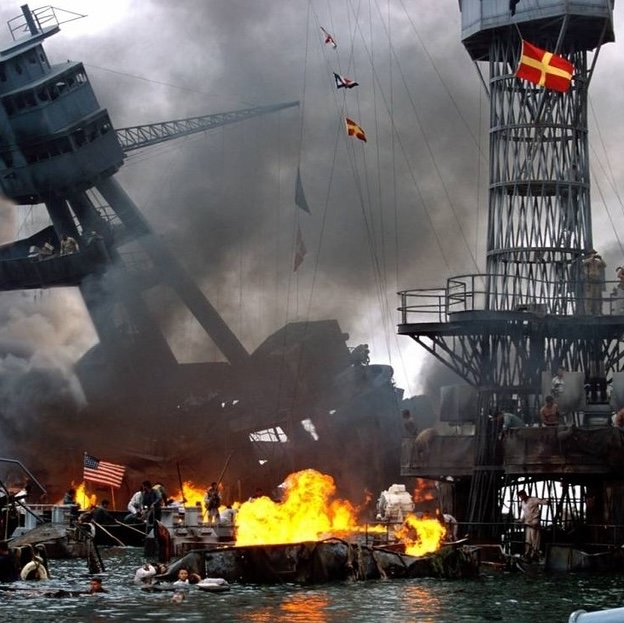
Pearl Harbor. Japan’s attack on the United States is remembered as a unilateral action of baffling recklessness. Although the recklessness is plain enough, it appears less baffling when considered in light of Japan’s alliance with Germany, and its successful effort to secure Soviet neutrality in the Pacific.
Stalingrad. Stalingrad is widely regarded as the “turning point” of the Second World War in Europe. If so, it is less because the Soviet victory turns the tide of battle, than because it alters relations between Stalin and his Western allies.
The Marianas. Tokyo always saw the Mariana Islands as integral to the final defense of Japan. Their capture by the Americans created new strategic possibilities for the Allies. It reformulated the question of how victory in the Pacific might be achieved, and at what cost.
PRESENTER:
Daniel J. Moran is Professor of National Security Affairs at the Naval Postgraduate School in Monterey, Ca. He was educated at Yale and Stanford Universities, and has also been a member of the Institute for Advanced Study at Princeton and Professor of Strategy at the Naval War College in Newport, Rhode Island. Dr. Moran teaches courses and supervises doctoral research in strategic theory, American foreign relations, and the history of war and international relations since the end of the 19th century.